Every Monica Fergus wall sculpture begins with a simple lump of clay. From there, the form develops gradually through hand shaping, drying, firing and individually layered glazes. The process is both carefully considered and full of unexpected moments, particularly when a piece emerges from the kiln.
Working from photographs of the marine creatures that inspire her, Monica shapes each sculpture by hand. Some sculptures are created in several separate parts, with each part designed to hang independently. Because the clay remains extremely fragile throughout the making process, the final result is not always known until the piece is complete.
Shaping the Clay
The process starts with clay.
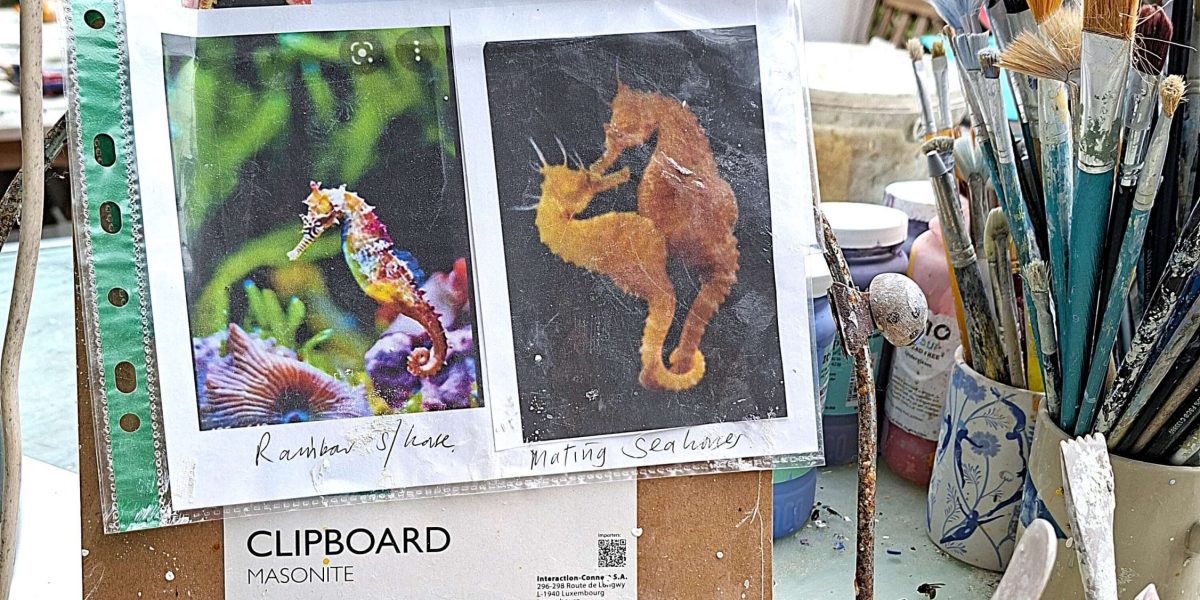
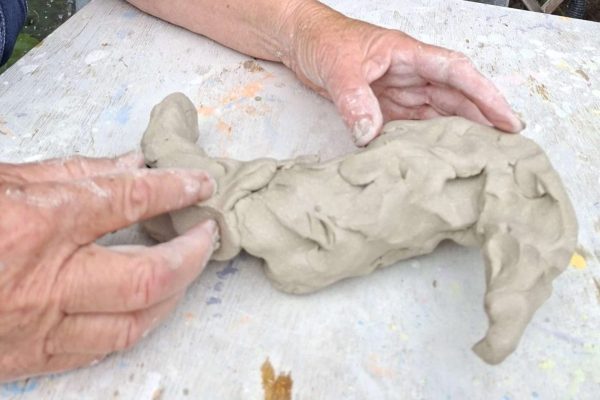
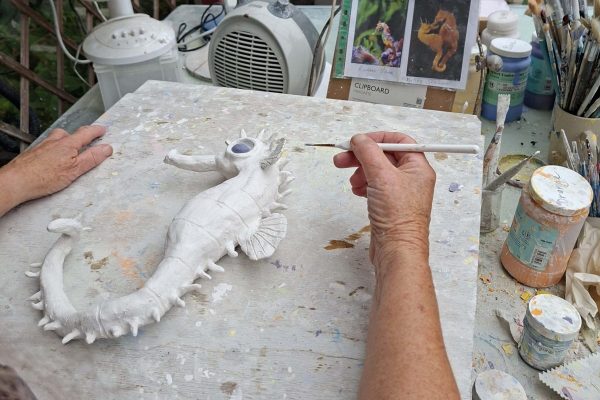
Using photographs of fish, sea slugs and other marine life as references, Monica carefully shapes the clay by hand. The form develops gradually as she works, transforming the original lump of clay into the creature she has imagined.
Some sculptures are made from several individual sections, which eventually come together as part of the finished wall sculpture.
Drying
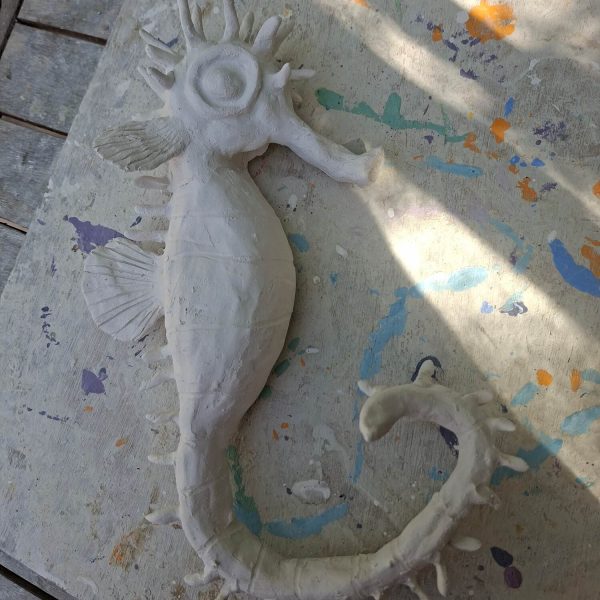
Once the shape is complete, the clay needs time to dry.
During this stage, Monica continues to make adjustments when the clay has dried enough to be handled. Depending on the conditions, drying can take several days or around a week during cold, wet weather.
Monica’s studio is a glasshouse in her garden near Kinsale.
Firing & Bisque Firing
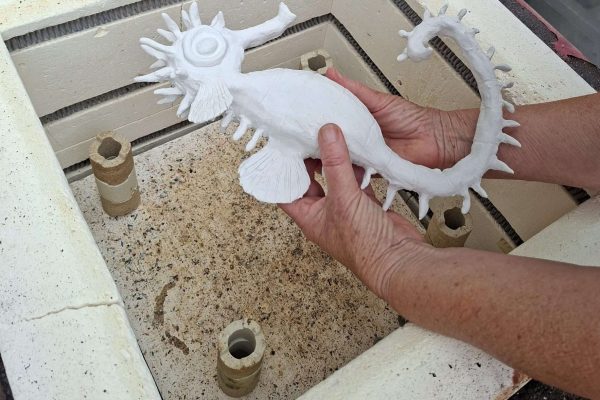
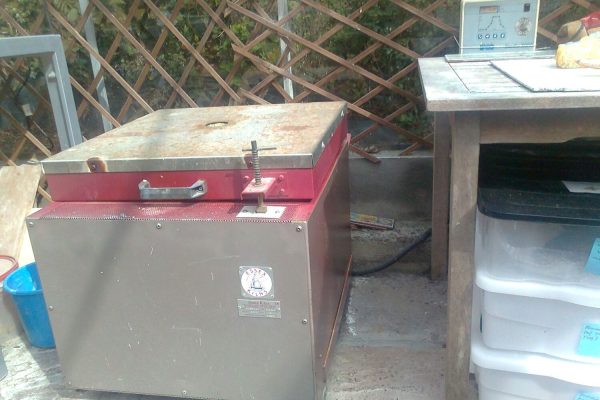
After air drying, the sculpture is fired in the kiln to complete the drying process. It is then bisque fired.
This prepares the ceramic surface for the next stage of the process: glazing.
Layering the Glazes
Colour is an important part of Monica’s ceramic work.
She mixes and layers different glazes, using photographs of the fish and sea slugs that inspire her. For her plankton sculptures, she works from microscope photographs of organisms that may be only 2–3 millimetres in size. Although their colours can be difficult to see at such a tiny scale, Monica focuses on the traces of colour visible in the photographs.
Each piece receives its own combination of specially mixed and layered glazes, contributing to its individual character.
The High-Temperature Firing
Once the glazes have been applied, the sculpture returns to the kiln for another firing at a temperature close to 1200°C.
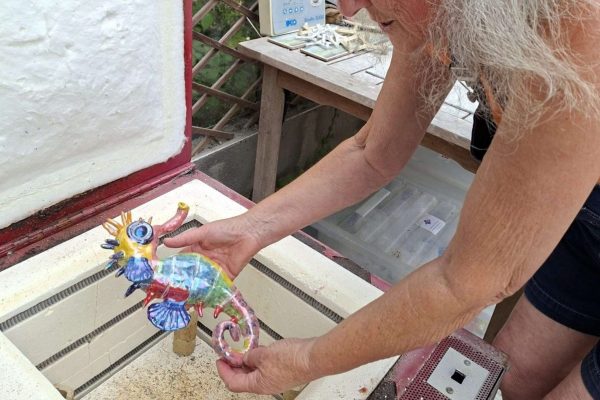
This is one of the moments of uncertainty in the making process. Some glazes change colour during firing, while different layers can appear in unexpected ways. The final surface is revealed only when the sculpture comes out of the kiln.
Creating the Iridescence
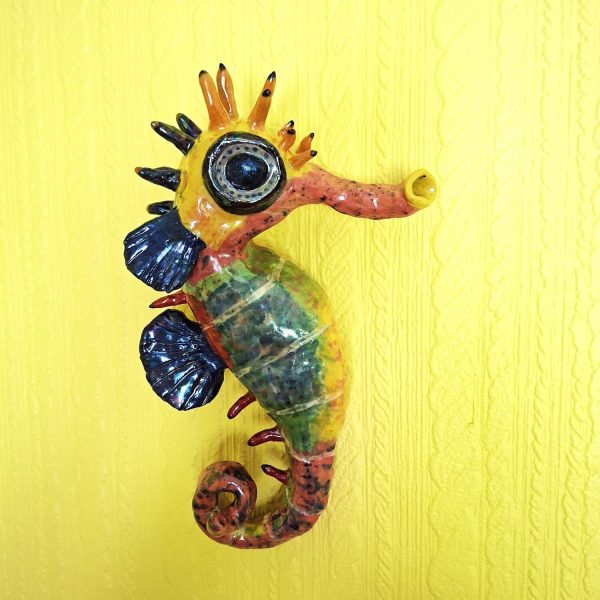
After the high-temperature firing, Monica applies another glaze to create the iridescent quality associated with ocean life.
Because this glaze requires a lower firing temperature, it is applied after the high-temperature firing rather than before it.
The Finishing Touches
The final stage involves any finishing touches that may be needed, followed by attaching the wires that allow the completed ceramic sculpture to be displayed on a wall.
Then, after its long journey from clay to finished sculpture, the piece is ready to leave the studio and find its place in the world.
Every Piece Is Unique
Monica’s ceramic wall sculptures are individually shaped and finished by hand. Her work is inspired by the captivating forms and colours of living fish, plankton and sea slugs, including species from tropical waters and marine life found around the Irish coast.
The combination of hand-shaped forms, individually mixed glazes and the unpredictable nature of ceramic firing means that each finished sculpture has its own character.
From a lump of clay to a one-of-a-kind work of art.